182 N Port Road, Unit 3
Port Perry, Ontario L9L 0B7
Office: (905) 831-7001 / (888) 862-5356
Fax: (905) 831-7443 / (866) 885-1583
E-Mail: sales@lev-co.com
.png)
-1.JPG)
.JPG)
.JPG)
.JPG)
.JPG)
.JPG)
-1.JPG)
-1.JPG)
-1.JPG)
-1 (1) (1).jpg)
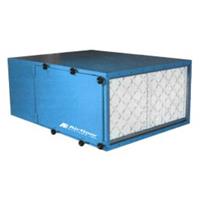
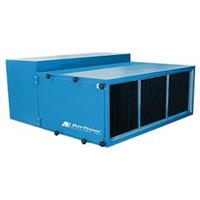
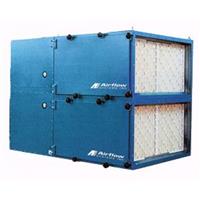
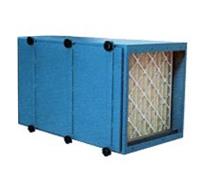
Ducted Air Cleaners
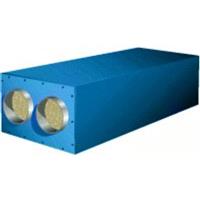
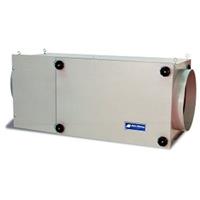
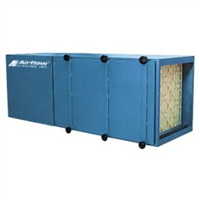
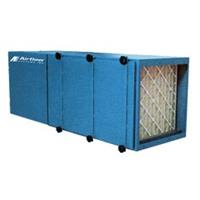
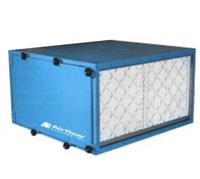
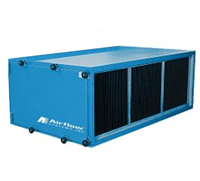
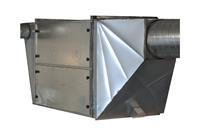
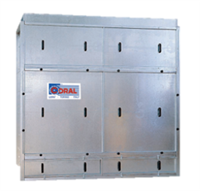
Ducted Air Cleaners are designed to help capture and filter airborne contaminants through a connected ducted system in industrial and commercial environments. They are commonly used in applications where dust, smoke, mist, or gas-phase contaminants need to be managed using application-specific filtration rather than a one-size-fits-all approach. These systems can be configured with different filter types, including particulate, mist, and gas-phase media, and may be supplied with or without pre-engineered fan packages.
These systems are often used where contaminants are generated at defined pickup points and must be conveyed through ductwork to a centralized or dedicated air-cleaning unit. Depending on the application, Ducted Air Cleaners may be used for welding fumes, grinding dust, mist, VOC-related processes, 3D printing, laboratory work, and other operations where the contaminant profile determines the filtration strategy. The best fit depends on the contaminant, required airflow, duct layout, filter media, and whether the system is being used for particulate, liquid, or gas-phase control.
What are Ducted Air Cleaners?
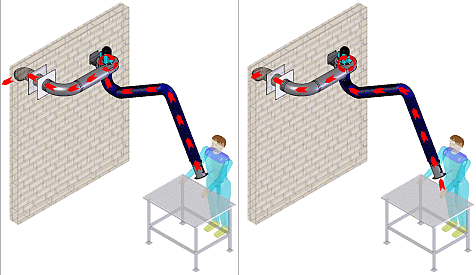
Ducted Air Cleaners are filtration systems connected to hoods, pickup points, or enclosed process areas through ductwork so contaminated air can be captured, transported, and cleaned before discharge or recirculation. Depending on the design, they may use HEPA filtration, mist agglomeration, gas-absorption media, or other filter arrangements selected to suit the process. They are typically chosen when a facility needs more tailored filtration and a ducted layout rather than relying only on portable or ambient room-cleaning equipment.
When should you use Ducted Air Cleaners?
Ducted Air Cleaners are typically used when contaminants are generated at identifiable source points and the filtration method must be matched closely to the pollutant being handled. They may be a strong choice for facilities managing welding smoke, grinding dust, mist, VOC-related emissions, or mixed-process air streams where source capture is needed along with more specialized filtration. The best fit depends on the process, required capture and transport velocities, system resistance, filter compatibility, and whether a pre-engineered or custom fan arrangement is more appropriate.
Typical applications
- welding and fabrication
- grinding and finishing
- mist-producing processes
- VOC-related or gas-phase applications
- 3D printing environments
- laboratory and technical work areas
- repair and maintenance operations
- process-specific ducted air-cleaning projects
Key benefits
- supports application-specific filtration for particulate, mist, and gas-phase contaminants
- connects to ducted capture points for more integrated contaminant control
- available with or without pre-engineered fan packages
- suited to a wide range of industrial and commercial processes
- can be configured for different airflow requirements and filter arrangements
Important selection considerations
When selecting a Ducted Air Cleaner, key factors may include:
- contaminant type and concentration
- required capture, transport, and face velocities
- duct layout and system static pressure
- particulate, mist, or gas-phase filter requirements
- airflow volume and fan selection
- maintenance access and filter replacement intervals
- compatibility with the process and working environment
- whether the system will be used for source capture, enclosure exhaust, or broader ducted air cleaning
The right Ducted Air Cleaner depends on how and where it will be used. LEV-CO can help review your process, contaminant profile, airflow requirements, and filtration needs to recommend a practical solution for ducted particulate, mist, and gas-phase air cleaning.
Ducted Air Cleaners are used in a variety of applications where the filter selection often requires a specific configuration. With these collectors, you can select a variety of particulate, liquid or gas phase filters such as “HEPA” filters, “Mist Agglomerators”, and “Gas Absorbers” respectively. These systems are available with or without pre-engineered and installed fan packages.
Here are some general design velocities when using "CAPTURE" Hoods:
Smoke (e.g. Welding):
- Capture Velocity 100 FPM
- Transport Velocity 3000 FPM
- Minimum Face Velocity 2355 FPM
Dust (e.g. Grinding):
- Capture Velocity 500 FPM
- Transport Velocity 4000 FPM
- Minimum Face Velocity 4000 FPM
Gas (e.g. V.O.C.'s):
- Capture Velocity 50 FPM
- Transport Velocity 2000 FPM
- Minimum Face Velocity 785 FPM
Mist:
- Capture Velocity 100 FPM
- Transport Velocity 2250 FPM
- Minimum Face Velocity 1766 FPM
- Aerospace - Deburring
- Aerospace - Steel Welding
- Aerospace - Surface Grinders
- Apparel & Clothing - Clothing Assembly Line
- Apparel & Clothing - Textile Dyeing
- Auto body repair - Buffing and Polishing
- Auto body repair - Deburring
- Auto body repair - Steel Welding
- Auto body repair - Torch Cutting Ventilation
- Chemicals and Plastics - Pesticide Manufacturing
- Educational - Machine Shop
- Educational - Welding Shop
- Electronics - 3D Printing
- Farm & Heavy Equipment - Farm Equipment Repair
- Farm & Heavy Equipment - Heavy Equipment Repair
- Farm & Heavy Equipment - Steel Welding
- Food & Beverage - Food Packaging Plant
- Forensics - Forensic Laboratories
- Machine Shop - Steel Welding
- Machine Shop - Surface Grinders
- Metalworking - Steel Welding
- Mining & Quarrying - Lead Smelting
- Misc. Operations - 3D Printing
- Misc. Operations - Cigarette and Tobacco Smoke
- MRO - Heavy Equipment Repair
- MRO - Steel Welding
- MRO - Torch Cutting Ventilation
- Municipal & DOT Garage - Steel Welding
- Museums & Artifacts - Paleontology
- National Defense - Indoor Pistol and Small Bore Rifle Range Ventilation
- National Defense - Military Vehicle Repair
- National Defense - Steel Welding
- Robotics - 3D Printing
- Vehicle Repair - Buffing and Polishing
- Waste Management - Waste Management Facilities
- Welding Shops - Stainless Welding
- Welding Shops - Steel Welding
- Welding Shops - Torch Cutting Ventilation
Yes, but only when systems are configured, installed, and maintained for the correct use application. Choosing the right filter is essential for ensuring the reliability, effectiveness, and safety of your unit.
For a full list of industries, refer to our Industry Solution Page
For a list of available models, check out our catalog below.
Industrial workers are exposed to a variety of health hazards every day. As a result, these workers risk the possibility of becoming sick, ill, and in some cases, permanently disabled. According to a WHO estimate (WHO, 2000), unintentional poisonings led to 300,000 deaths in the year 2000.
This is our mission, but it will only succeed if we use and configure the right equipment. Our team works to make the logistics of those questions as straightforward and coherent as possible, and as such, will work with you to provide you with the best extraction system that fits your worker's needs. This includes everything from accessibility and usability to longevity and reliability.
You can read more about the risks and preventions of fume extraction below:
OSHA
WHO