182 N Port Road, Unit 3
Port Perry, Ontario L9L 0B7
Office: (905) 831-7001 / (888) 862-5356
Fax: (905) 831-7443 / (866) 885-1583
E-Mail: sales@lev-co.com
.png)
-1.JPG)
.JPG)
.JPG)
.JPG)
.JPG)
.JPG)
-1.JPG)
-1.JPG)
-1.JPG)
-1 (1) (1).jpg)
Centrally Ducted Filter Units
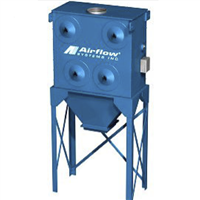
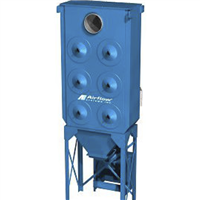
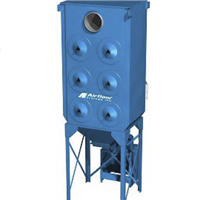
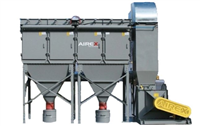
Centrally Ducted Filter Units are designed to help capture and filter airborne contaminants from multiple work areas through a connected duct system. They are commonly used in larger industrial and commercial environments where dust, fumes, smoke, mist, or process emissions need to be managed across several stations or pieces of equipment. These systems are often a strong fit for larger shops and centrally ducted applications where a single collector can support broader facility needs.
These systems are often used where a facility needs higher airflow capacity, centralized filtration, and a more integrated contaminant-control strategy than standalone or workstation-based units can provide. Depending on the application, Centrally Ducted Filter Units may be used to serve welding areas, grinding stations, dust-producing processes, material handling points, woodworking equipment, or other operations where contaminants are generated at multiple fixed locations. The right approach depends on the contaminant, required airflow, number of pickup points, duct design, and filtration method.
What are Centrally Ducted Filter Units?
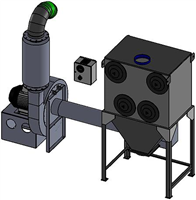
Centrally Ducted Filter Units are filtration systems that connect to multiple hoods, capture points, or process enclosures through a common duct network. Depending on the design, they may include a central dust collector or filtration unit, self-cleaning filter technology, fan arrangements, discharge components, and application-specific safety features. They are typically selected when a facility needs one central system to support multiple fixed workstations or contaminant-generating processes.
When should you use Centrally Ducted Filter Units?
Centrally Ducted Filter Units are typically used when airborne contaminants are generated at several fixed points and a centralized system is more practical than installing separate units at each location. They may be a strong choice for larger shops, production facilities, process lines, and operations where multiple workstations need coordinated contaminant control. The best fit depends on the process, contaminant characteristics, airflow demand, duct routing, filter media, and whether special risks such as fire, explosion, or flammability need to be addressed.
Typical applications
- large welding and fabrication shops
- grinding and finishing areas
- woodworking equipment and dust-producing machinery
- packaging and material handling points
- machine shop processes
- production lines with multiple pickup points
- educational shops and technical facilities
- centralized retrofit projects in larger facilities
Key benefits
- supports contaminant control across multiple fixed work areas
- allows a single central unit to serve multiple workstations
- suited to larger airflow demands and integrated ducted layouts
- available with self-cleaning filtration in many applications
- can be configured for application-specific risks and operating conditions
Important selection considerations
When selecting a Centrally Ducted Filter Unit, key factors may include:
- contaminant type and concentration
- total airflow and velocity requirements
- number and location of capture points
- duct layout and system static pressure
- filter media and filter-cleaning method
- maintenance requirements and filter replacement intervals
- fire, explosion, flammability, corrosion, or abrasion risks
- facility layout, utilities, and installation constraints
The right Centrally Ducted Filter Unit depends on how and where it will be used. LEV-CO can help review your process, contaminant profile, airflow needs, and facility layout to recommend a practical solution for multi-station contaminant control, large-shop applications, and centralized filtration projects.
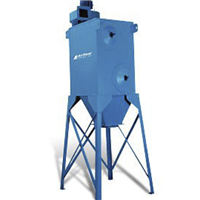
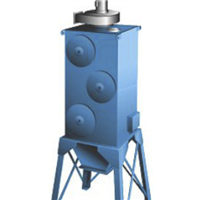
Centrally Ducted Dust Collectors such as these are ideal for large shops and centrally ducted applications. Most of these solutions are based upon self-cleaning filter cleaning systems to help reduce filter costs. In addition, Water-based filtration systems are available for certain explosive and flammable applications.
You can find a full list of suitable applications below:
- Aerospace - Shot Blasting
- Aerospace - Steel Welding
- Auto body repair - Steel Welding
- Bio & Pharma - Pill Productions
- Bio & Pharma - Prosthetics & Orthotics
- Bio & Pharma - Tablet Press Machine
- Chemicals and Plastics - CNC Plastic Milling Machine
- Chemicals and Plastics - Pesticide Manufacturing
- Chemicals and Plastics - Resin Manufacturing
- Educational - Auto Shop
- Educational - Machine Shop
- Educational - Welding Shop
- Educational - Wood Shop
- Farm & Heavy Equipment - Farm Equipment Repair
- Farm & Heavy Equipment - Heavy Equipment Repair
- Farm & Heavy Equipment - Steel Welding
- Food & Beverage - Animal Food Manufacturing
- Food & Beverage - Food Packaging Plant
- Forensics - Forensic Laboratories
- Machine Shop - Abrasive Blasting Cabinet
- Machine Shop - Abrasive Blasting Room
- Machine Shop - Abrasive Cut-Off Saw
- Machine Shop - Buffing Lathe
- Machine Shop - Horizontal Double-Spindle Disc Grinder
- Machine Shop - Metal Polishing Belt
- Machine Shop - Portable Chipping and Grinding Table
- Machine Shop - Steel Welding
- Machine Shop - Swing Grinder
- Machine Shop - Tumbling Mills
- Machine Shop - Vertical Spindle Disc Grinder
- Marine - Hull Building
- Metalworking - Steel Welding
- Mining & Quarrying - Drilling
- Mining & Quarrying - Lead Smelting
- Mining & Quarrying - Nickel Mining
- MRO - Heavy Equipment Repair
- MRO - Steel Welding
- Municipal & DOT Garage - Steel Welding
- Museums & Artifacts - Artifact Cleaning
- Museums & Artifacts - Paleontology
- National Defense - Military Vehicle Repair
- National Defense - Steel Welding
- Packaging - Bin & Hopper Ventilation
- Packaging - Conveyor Belt Ventilation
- Packaging - Rail Loading
- Packaging - Toxic Material Belt Conveying Head Pulley
- Packaging - Toxic Material Conveyor Belt Loading
- Packaging - Truck Loading
- Public Transportation - Subway Maintenance and Repair
- Refineries & Energy - Petroleum Refining
- Robotics - Robot Welding
- Waste Management - Waste Management Facilities
- Welding Shops - Nickel Welding
- Welding Shops - Stainless Welding
- Welding Shops - Steel Welding
- Woodworking - Band Saw
- Woodworking - Jointer
- Woodworking - Mortiser
- Woodworking - Planer
- Woodworking - Radial Arm Saw
Yes, we have a large variety of configurations available to suit every application. But the local exhaust ventilation systems we supply only work when they are configured and maintained as they are designed. The correct filter selection is paramount to smoothly capturing the contaminant properly and maintaining a safe work environment.
You can find a list of suitable industries below:
- Aerospace - Shot Blasting
- Aerospace - Steel Welding
- Auto body repair - Steel Welding
- Bio & Pharma - Pill Productions
- Bio & Pharma - Prosthetics & Orthotics
- Bio & Pharma - Tablet Press Machine
- Chemicals and Plastics - CNC Plastic Milling Machine
- Chemicals and Plastics - Pesticide Manufacturing
- Chemicals and Plastics - Resin Manufacturing
- Educational - Auto Shop
- Educational - Machine Shop
- Educational - Welding Shop
- Educational - Wood Shop
- Farm & Heavy Equipment - Farm Equipment Repair
- Farm & Heavy Equipment - Heavy Equipment Repair
- Farm & Heavy Equipment - Steel Welding
- Food & Beverage - Animal Food Manufacturing
- Food & Beverage - Food Packaging Plant
- Forensics - Forensic Laboratories
- Machine Shop - Abrasive Blasting Cabinet
- Machine Shop - Abrasive Blasting Room
- Machine Shop - Abrasive Cut-Off Saw
- Machine Shop - Buffing Lathe
- Machine Shop - Horizontal Double-Spindle Disc Grinder
- Machine Shop - Metal Polishing Belt
- Machine Shop - Portable Chipping and Grinding Table
- Machine Shop - Steel Welding
- Machine Shop - Swing Grinder
- Machine Shop - Tumbling Mills
- Machine Shop - Vertical Spindle Disc Grinder
- Marine - Hull Building
- Metalworking - Steel Welding
- Mining & Quarrying - Drilling
- Mining & Quarrying - Lead Smelting
- Mining & Quarrying - Nickel Mining
- MRO - Heavy Equipment Repair
- MRO - Steel Welding
- Municipal & DOT Garage - Steel Welding
- Museums & Artifacts - Artifact Cleaning
- Museums & Artifacts - Paleontology
- National Defense - Military Vehicle Repair
- National Defense - Steel Welding
- Packaging - Bin & Hopper Ventilation
- Packaging - Conveyor Belt Ventilation
- Packaging - Rail Loading
- Packaging - Toxic Material Belt Conveying Head Pulley
- Packaging - Toxic Material Conveyor Belt Loading
- Packaging - Truck Loading
- Public Transportation - Subway Maintenance and Repair
- Refineries & Energy - Petroleum Refining
- Robotics - Robot Welding
- Waste Management - Waste Management Facilities
- Welding Shops - Nickel Welding
- Welding Shops - Stainless Welding
- Welding Shops - Steel Welding
- Woodworking - Band Saw
- Woodworking - Jointer
- Woodworking - Mortiser
- Woodworking - Planer
- Woodworking - Radial Arm Saw
You can view our products in our catalog below.
Some important points to consider when purchasing:
- Velocity: What velocity is needed to pick up the contaminant?
- Filter Media: What is the air : cloth ratio required for consistent filtration for your application?
- Maintenance Costs: How often will the filter need to be washed/replaced?
- Are there any tertiary risks such as fire, explosion, etc., that I need to consider?
Industrial workers are exposed to a variety of health hazards every day. As a result, these workers risk the possibility of becoming sick, ill, and in some cases, permanently disabled. According to a WHO estimate (WHO, 2000), unintentional poisonings led to 300,000 deaths in the year 2000.
It's our mission to diminish that figure, but it only works if the correct equipment is used, and configured correctly. Our team works to make the logistics of those questions as straightforward and coherent as possible, and as such, will work with you to provide you with the best extraction system that fits your worker's needs. This includes everything from accessibility and usability to longevity and reliability.
You can read more about the risks and preventions of fume extraction below:
OSHA
WHO
Pros:
- High volume for larger application
- Industrial design
- Modular
- Single units serve multiple workstations
- Self-contained
- Covers large range of contaminants
Cons:
- Fixed position
- Installation
The integral flaw with dilution ventilation is that the contaminant picked up by the process ultimately stays airborne. Dilution ventilation picks up the contaminant and dilutes it with clean air, but doesn't remove the contaminant from the air until it has spread through the building to the exhaust system. As a result of this, dilution ventilation is not suitable for industrial processes. The contaminants produced in industrial process include toxic fumes, metal dust, oil mist, vapors, and gases.
Local exhaust ventilation is a much more effective extraction process that utilizes methods that capture the contaminant near or at the source of process. This eliminates the possibility of airborne contaminants entering the breathing zone. Rather than invest money into the buildings ventilation system to cope with the contaminant, simply invest in what will remove the risk all together.
To read up more about the benefits of local exhaust ventilation versus dilution ventilation, refer to these links:
CCOHS
Use of Local Exhaust and Dilution Ventilation
Construction:
Our units are built using only raw materials like steel and aluminum. This ensures a long lasting product that won't fail from fatigue of plastic or die-cast elements. We also finish our products in a durable polyurethane finish which designed to cope with harsh environments, reducing the risk of corrosion.
Filters:
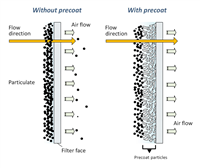
Our filter units incorporate a "Vibra-Pulse" filter cleaning system that reduces maintenance costs dramatically when compared to conventional filtration designs. We also offer a HEPA high efficiency after-filter to deliver 99.97% filter efficiency.
Electric Motor:
All of our units incorporate an electric direct-drive motor. Without the use of pulleys or belts, the maintenance associated with the motor is all but non-existent.