
182 N Port Road, Unit 3
Port Perry, Ontario L9L 0B7
Office: (905) 831-7001 / (888) 862-5356
Fax: (905) 831-7443 / (866) 885-1583
E-Mail: sales@lev-co.com
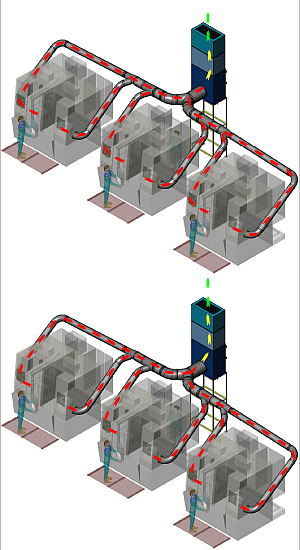
Mist Collectors
Products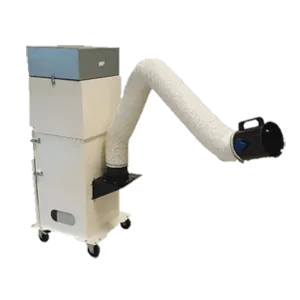
Mist Collectors are designed to help capture and filter airborne oil mist, coolant mist, and related process emissions in industrial and commercial environments. They are commonly used in machining and metalworking applications where fine mist, smoke, or light moisture-laden contaminants need to be controlled before they spread into the surrounding workspace. Filter designs for these systems are intended to handle mist-laden air and liquid drainage more effectively in the right applications.
These systems are often used where airborne mist is generated directly by machinery, tooling, coolant use, or related production processes and where localized or machine-connected capture is preferred. Depending on the application, Mist Collectors may be used as standalone point-source extraction systems or as integrated units connected more directly to the machining process. The best fit depends on the contaminant, the amount of mist and incidental dust being generated, the airflow required, and the filtration method selected.
What are Mist Collectors?
Mist Collectors are filtration systems used to remove airborne mist and similar fine process emissions from the air in machining and production environments. Depending on the design, they may be installed as portable or standalone point-source systems or integrated directly with the equipment generating the contaminant. These systems can be configured for different machine sizes, work areas, and airflow requirements.
When should you use Mist Collectors?
Mist Collectors are typically used when a process generates oil mist, coolant mist, or similar airborne emissions that need more targeted control than general room ventilation can provide. They may be a strong choice for CNC machining, cold heading, lathing, grinding-related applications, and other metalworking environments where mist is released near the machine or process enclosure. The best fit depends on whether capture is needed directly at the machine, through a hood or arm, or as part of a more integrated extraction arrangement, as well as how much dust, moisture, and runtime the system must handle.
Typical applications
- CNC machining
- cold-heading operations
- lathing and turning processes
- surface grinding and related mist-producing machining
- machine shop metalworking
- aerospace machining environments
- educational machine shops
- packaging or production areas with mist-generating equipment
Key benefits
- helps control airborne oil mist and coolant mist closer to the source
- supports cleaner machine areas and more manageable working conditions
- available for point-source capture or integrated machine connection
- suited to a range of machining environments and airflow requirements
- available in multiple capacities for different process demands
Important selection considerations
When selecting a Mist Collector, key factors may include:
- contaminant type and mist concentration
- whether the system will be point-source or integrated
- airflow and capture requirements
- filter type and drainage characteristics
- amount of incidental dust in the airstream
- machine layout and connection method
- portability or fixed-installation needs
- runtime, service access, and maintenance intervals
The right Mist Collector depends on how and where it will be used. LEV-CO can help review your machining process, contaminant characteristics, airflow needs, and facility conditions to recommend a practical solution for oil mist, coolant mist, and related process-emission control.
These units are designed to capture airborne contaminants such as oil mist and chemicals, while simultaneously extracting and containing dust and moisture created by the machining process. Our units use filters that are "SELF-DRAINING", which captures moisture, and dust at the same time, and as such, it is very important that the amount of dust being captured by these systems does not exceed more than 5% of the total extracted pollutant. If the dust quantity is kept to a minimum, filter life can be expected between 1 to 5 years depending on the application and runtime.
Mist Collectors are for a variety of mist-producing applications such as CNC machining and cold-heading applications. A full list of applications can be found below:
Yes, these units can make the workplace safer by capturing harmful oil mists that otherwise mix with the air in industrial facilities. However, the effectiveness of our units relies on proper configuration, installation, and maintenance for the specific application. We offer a range of configurations that vary from standalone extraction systems with point source extraction, to integrated systems that extract directly from the machining process.
Our mist collectors are designed for precision metalwork applications, such as CNC machining, cold-heading, and lathing applications.
To see our selection of products, check out our catalog below
Some important points to consider when purchasing:
- Velocity: How much airflow is needed to pick up the contaminant?
- Point-Source or Integrated System: Do you need to extract from a workstation, or from a machining process?
- Portability: Do you need mist collection from multiple workstations, or integrated installation?
- Filter Selection: What filter do you need for your contaminant?
- Positioning: Do you need an extraction arm to capture your source more effectively?
Industrial workers are exposed to a variety of health hazards every day. As a result, these workers risk the possibility of becoming sick, ill, and in some cases, permanently disabled. According to a WHO estimate (WHO, 2000), unintentional poisonings led to 300,000 deaths in the year 2000.
It is our goal to diminish that figure, but it only works if the correct equipment is used, and configured correctly. Our team works to make the process of answering your questions as straightforward and coherent as possible, and as such, will work with you to provide you with the system that best fits your needs. This includes everything from accessibility and usability to longevity and reliability.
You can read more about the risks and preventions of fume extraction below:
OSHA
WHO
Mist:
- Capture Velocity 100 FPM
- Transport Velocity 2250 FPM
- Minimum Face Velocity 1766 FPM
Here are some general design velocities when using "ENCLOSING" Hoods:
Mist CNC:
- Minimum Face Velocity 75 FPM
- Transport Velocity 2250 FPM