
182 N Port Road, Unit 3
Port Perry, Ontario L9L 0B7
Office: (905) 831-7001 / (888) 862-5356
Fax: (905) 831-7443 / (866) 885-1583
E-Mail: sales@lev-co.com
Overhead Filter Systems
Products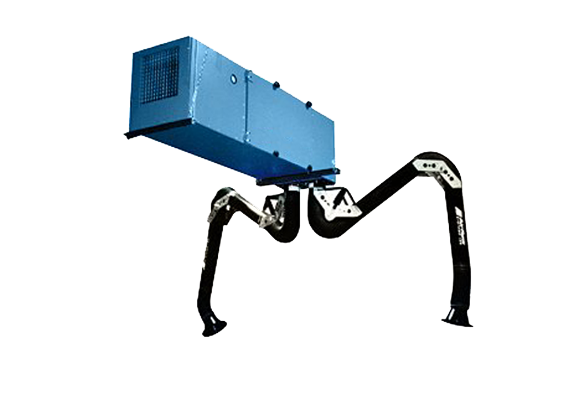
Overhead Filter Systems are designed to help capture and filter airborne contaminants above or around the point where they are generated in industrial and commercial environments. They are commonly used where fumes, dust, smoke, or similar process emissions need to be controlled using an overhead hood, suspended capture arrangement, or partial enclosure. These systems are often selected when the process layout allows contaminants to rise naturally or when overhead capture is more practical than floor-mounted equipment.
These systems are often used where a work area needs localized contaminant control without relying on a portable unit or a full booth enclosure. Depending on the application, Overhead Filter Systems may use complete enclosures, partial enclosures, or suspended overhead hoods to help contain and remove contaminants from the work zone. The right approach depends on the contaminant, the process layout, the direction of contaminant movement, and the airflow needed to keep emissions from escaping into the surrounding workspace.
What are Overhead Filter Systems?
Overhead Filter Systems are localized exhaust and filtration systems that capture contaminated air from above the work process or within an enclosed or partially enclosed hood arrangement. In some applications, they may use a complete enclosure with minimal openings, while in others they may use a partial enclosure or suspended hood positioned over the source. They are typically selected when the process can be effectively controlled through overhead capture and when enclosure-based source control is more practical than arm-based extraction.
When should you use Overhead Filter Systems?
These systems are typically used when contaminants are generated in a defined work zone and an overhead or enclosure-style capture method can help contain and remove them effectively. They may be a strong choice for welding, polishing, buffing, and similar operations where the process can be partially enclosed or where suspended capture above the work area makes operational sense. The best fit depends on the process, contaminant behavior, hood or enclosure design, filter selection, and how consistently the system can keep emissions within the intended capture area.
Typical applications
- welding and fabrication
- buffing and polishing
- aerospace and metalworking applications
- auto body and vehicle repair processes
- educational welding shops
- maintenance and repair operations
- waste-management process areas
- workstation capture where partial enclosure is practical
Key benefits
- supports source capture from above or around the process
- can use complete or partial enclosure strategies where appropriate
- helps limit contaminant escape into the surrounding workspace
- suited to suspended and overhead-mounted configurations
- available in configurations for different airflow and filtration needs
Important selection considerations
When selecting an Overhead Filter System, key factors may include:
- contaminant type and concentration
- whether complete or partial enclosure is feasible
- hood or enclosure position relative to the source
- required airflow and containment performance
- filter selection for the application
- available overhead mounting or support structure
- accessibility and visibility within the work zone
- maintenance access and long-term operating requirements
The right Overhead Filter System depends on how and where it will be used. LEV-CO can help review your process, contaminant characteristics, layout, and filtration needs to recommend a practical solution for suspended capture, enclosure-based source control, and overhead filtration applications.
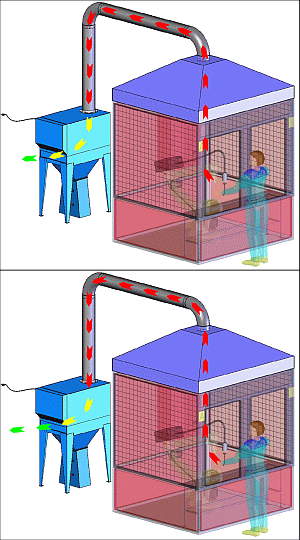
Updraft and Overhead hoods, completely or partially enclose the process or contaminant generation point.
For example:
A Complete Enclosure would be a sealed “box” or similar type of configuration where only minimal openings exist and the contaminated air is sucked up and away. The enclosing hood is preferred wherever the process configuration and operation will permit.
A Partial Enclosure would be an “open box” (i.e.: with the lid cut off). An inward flow of air through the enclosure opening will contain the contaminant within the enclosure and prevent its escape into the outside work environment.
If a complete enclosure is not feasible, the partial enclosure should be used to the maximum extent possible.
- Aerospace - Steel Welding
- Auto body repair - Buffing and Polishing
- Auto body repair - Steel Welding
- Chemicals and Plastics - Rubber Manufacturing
- Educational - Welding Shop
- Farm & Heavy Equipment - Steel Welding
- Machine Shop - Steel Welding
- Metalworking - Steel Welding
- MRO - Steel Welding
- Municipal & DOT Garage - Steel Welding
- National Defense - Steel Welding
- Vehicle Repair - Buffing and Polishing
- Waste Management - Waste Management Facilities
- Welding Shops - Nickel Welding
- Welding Shops - Stainless Welding
- Welding Shops - Steel Welding
Yes it will, but only when systems are set up and maintained for the correct application. Filter selection is the most important variable to ensuring the reliability, effectiveness, and safety of the unit you use.
For a full list of industries, refer to our Industry Solution Page
For a list of available models, check out our catalog below.
Industrial workers are exposed to a variety of health hazards every day. As a result, these workers risk the possibility of becoming sick, ill, and in some cases, permanently disabled. According to a WHO estimate (WHO, 2000), unintentional poisonings led to 300,000 deaths in the year 2000.
It's our mission to diminish that figure, but it only works if the correct equipment is used, and configured for the right contaminant. Our team works to make the logistics of those questions as straightforward and coherent as possible, and as such, will work with you to provide you with the best extraction system that fits your worker's needs. This includes everything from accessibility and usability to longevity and reliability.
You can read more about the risks and preventions of fume extraction below:
OSHA
WHO